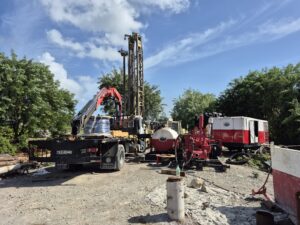
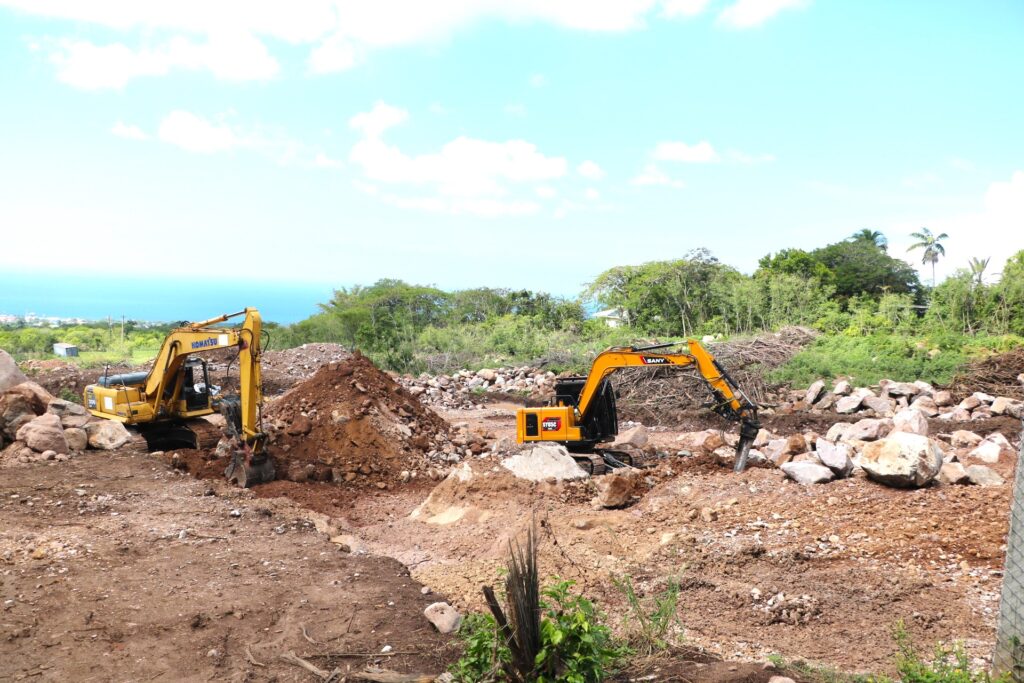
NIA CHARLESTOWN, NEVIS (November 10, 2026)– Civil works are progressing at the Hamilton site in preparation for the arrival of the rig to commence the drilling phase of the Nevis Geothermal Project.
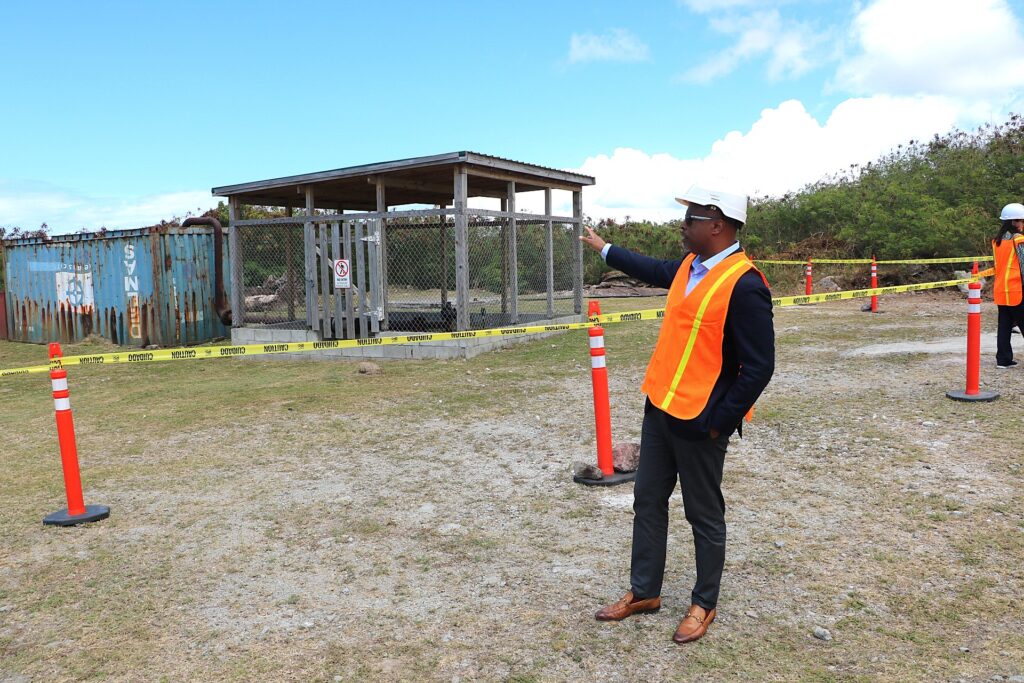
Premier of Nevis and Minister of Energy and Utilities in the Nevis Island Administration (NIA), the Honourable Mark Brantley, provided an update on the geothermal project during a recent press conference, outlining the preparations being undertaken at the production well site and the status of arrangements with the drilling contractor, Iceland Drilling.
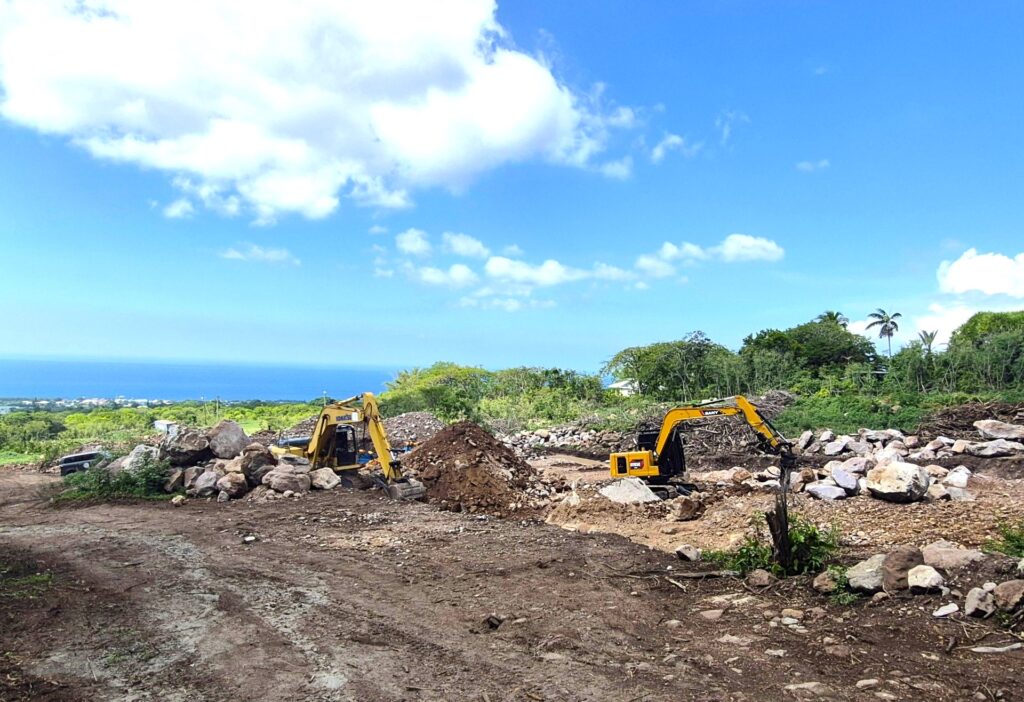
“I do not have a date that I can give you, but what I can tell you is that significant preparatory work continues. We have what they refer to as civil works that we need to complete. So the site is being cleaned and we’ve done a preliminary removal of some of the vegetation.
“We now have to do some works here to prepare for the rig. The last we heard from Iceland Drilling is that the rig is ready to be deployed. They have already started to move in some of the equipment. In fact, I was told that some 12 containers had already arrived.”
Premier Brantley explained that the preparatory work involves more than clearing the site, as the various activities must be carried out under the supervision of independent engineers and in keeping with environmental protection requirements.
He noted that the NIA is working to meet these requirements while exploring possible assistance from development partners. Discussions at the Caribbean Renewable Energy Forum (CREF), for example, included potential European Union (EU) financing to help cover the cost of technical oversight and other civil works.
“Just so the public has an appreciation, the thing about the civil works is that it’s not just putting our backhoes and excavators up there to clear. Everything that’s done has to be done under the supervision of independent engineers that we have to hire, and whatever we do there has to accord with the necessary environmental protections.
“A lot of people are saying, ‘All this time’ and ‘You all wasting time’ and all of that. I want the public to understand, this project is an incredibly complex undertaking with a lot of moving parts, and we can’t move at a pace that we would like to move because we could have had that site cleared, topsoil removed, and all that already. But they’re saying no, you can’t because if you do that, you run the risk of violating some provision of your arrangements in terms of financing. Every step that we take has to be carefully monitored and managed and documented so that they know that we are complying with the necessary requirements. So, it takes time.”
The Premier said the NIA is making every effort to ensure that the site is ready before the drill rig is dispatched, noting that having the equipment on island before the necessary preparations are completed could result in additional costs.
“We’re trying our very best to get to a position where that rig can then come. Just so you understand why we don’t want the rig to come until we’re ready, is because if the rig is here and we’re not ready, then we have to pay penalties for the rig being on island and not being in use.
“So, we don’t want that rig to leave Iceland until such time as we are ready for it, and that is what we’re doing, continuing to make efforts to make ourselves ready.”
Looking ahead to the subsequent phases of the project, Premier Brantley said discussions with development partners are focused on securing technical and financial assistance for supporting infrastructure, separate from the production plant, which is expected to be taken to the market through a request for proposals (RFP).
He disclosed that the World Bank is considering financing the electricity interconnection between St. Kitts and Nevis as part of the geothermal development, while the European Union is exploring assistance to fund an independent engineer and support upgrades to the transmission and distribution infrastructure needed to facilitate the project.
The NIA is also examining options to strengthen the resilience of the proposed geothermal infrastructure, including the possibility of placing transmission lines underground. However, he noted that underground installation is a very costly option that would need to be carefully assessed.
Premier Brantley expressed optimism about the project’s financing prospects, highlighting the geothermal resource’s potential to generate significant revenue, create wealth and drive Nevis’ long-term economic development.
He called for a collective, all-hands-on-deck effort to advance the project, emphasising its potential to lower electricity costs, reduce dependence on imported fuel and deliver lasting benefits to the people of Nevis and the wider Federation.