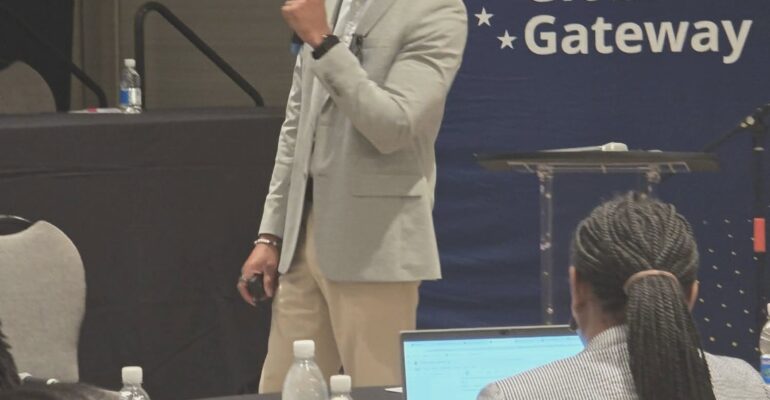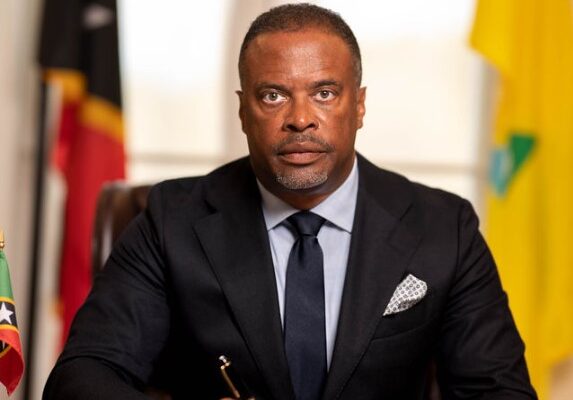
Regional media is reporting that the countries of the OECS with Citizenship By Investment (CBI) programmes have been formally put on notice by the European Union (EU) that those programmes must be shut down by 2028. I assume if they are not shut down then punitive consequences will follow including barring OECS nationals from visa-free access to Europe. This profoundly affects the economic fortunes of sovereign OECS States Antigua and Barbuda; St. Lucia; Grenada, Carriacou, and Petite Martinique; Dominica; and St. Kitts and Nevis. On March 22nd, 2026, I delivered an address to the inaugural congress of the Democratic Peoples Movement in Grenada. I said in part: “I have argued for some years and I believe it must now be clear to many that my own country St. Kitts and Nevis desperately needs to expand and diversify its economy. The same is true of Grenada. My research suggests that Citizenship by Investment accounted for as much as 30-35% of annual government revenues in Grenada in recent years. In St. Lucia that contribution in recent years has been around 15-25% of annual government revenue. In Dominica that contribution has been around 40-60% of annual revenue. St. Kitts and Nevis this number was as high as 60-70% of annual revenues. These numbers tell the tale of OECS economies heavily dependent on a single industry which in turn is largely dependent on policy prescriptions set in London, Ottawa, Washington, D.C. and Brussels. If our national revenue and development is outsourced to policymakers in distant lands then our claims of political independence are but mere imagination. It is no secret that the European Union wants these CBI programmes to end. Already the programmes in Malta and Cyprus have been closed down. Tightening visa restrictions on our people is one way that global powers are seeking to bring pressure to bear on these programmes and on our fragile economies.” The statistics suggest a heavy dependence by OECS countries on CBI inflows. This in turn means that if CBI goes away, then the implications for OECS economies will be devastating. As of writing, the only OECS Leader who has commented publicly is Prime Minister the Honourable Gaston Browne of Antigua and Barbuda. He makes a compelling argument that the EU is seeking to visit incalculable harm on the economies of his country and the wider OECS absent any proposal to compensate the OECS for lost revenue from CBI. He calls on the EU to offer alternatives to Antigua and Barbuda to fill the funding gap that a closure of CBI would entail. It is my respectful view that with wars and rumours of wars becoming the new reality of our world, members of the EU are already seeking to allocate more of their budgets to preparing for war in the name of preserving peace. The EU, like the US and other traditional partners of the OECS, are becoming increasingly insular, seeking to do less abroad and more at home. If my opinion is correct, it means that the EU will demand that OECS countries shut down our CBI industries without offering any alternatives to us. This brings me back to my speech in Grenada. I pointed out the danger of this overreliance on CBI inflows and urged OECS government to move with haste to diversify our economies. I said 4 months ago: “Grenada, like her OECS neighbours, has to move at pace to diversify its economy away from the significant dependence on CBI flows. I suggest that Grenada must: 1. Accelerate the development of the renewable energy sector. Grenada has abundant sun, wind and oceans and may also have significant geothermal potential. Grenada can transform its economy to an energy-based economy over the near term. New jobs, new revenue streams, huge savings from a move away from oil, insulation from external shocks particularly from oil-producing regions, new industries like data centres which require large amounts of cheap energy and above all significant cost relief for residents and local businesses from Hillsborough to St. Georges. Grenada must proceed at pace to achieve energy independence. 2. Investing in greater food security including agriculture and agriculture value-added products. There is no reason why Grenada and the rest of the region cannot become self-sufficient in much of what we eat. Fish, chicken, pork, vegetables, fruits all can be produced at scale in Grenada. You have abundant water and fertile lands. These same lands once built immense wealth for the British Empire. Let us now use our lands to feed ourselves and build wealth for our people. Again, this insulates us from external shocks and can potentially help us to better control the cost and equally importantly the quality of what our people eat. My brothers and sisters, food security is national security. 3. Get the growing cruise industry to contribute more to enjoy our shores. The Caribbean currently accounts for 45% of the global cruise industry. Cruise companies generate US$30 billion in annual revenues from their Caribbean operations but the Caribbean only captures an estimated $4 billion of that value. We are earning less than 15% of the total value generated from the use of our oceans, beaches and islands. The OECS has a strong cruise sector but charges very little to the cruise companies. Grenada at approximately US$4.50 has among the lowest head tax rate in the entire region. The OECS should harmonize their head tax which currently hovers around US$7. The Bahamas for example is more than 3 times that. 4. Accelerate investment in the creative economy. In Nevis we took a decision in 2020 at the height of the Covid epidemic to start a film industry. It was bold and many said it could not be done. As I speak to you today, I can report that in the past 5 years we have seen 14 feature films, 2 television series and 4 fashion catalogue photo shoots done on Nevis. Our young people have developed skills as make up artists, set and costume designers and more and