Op-ed by Hon. Mark Brantley: Does St. Kitts and Nevis hold the key to regional stability?
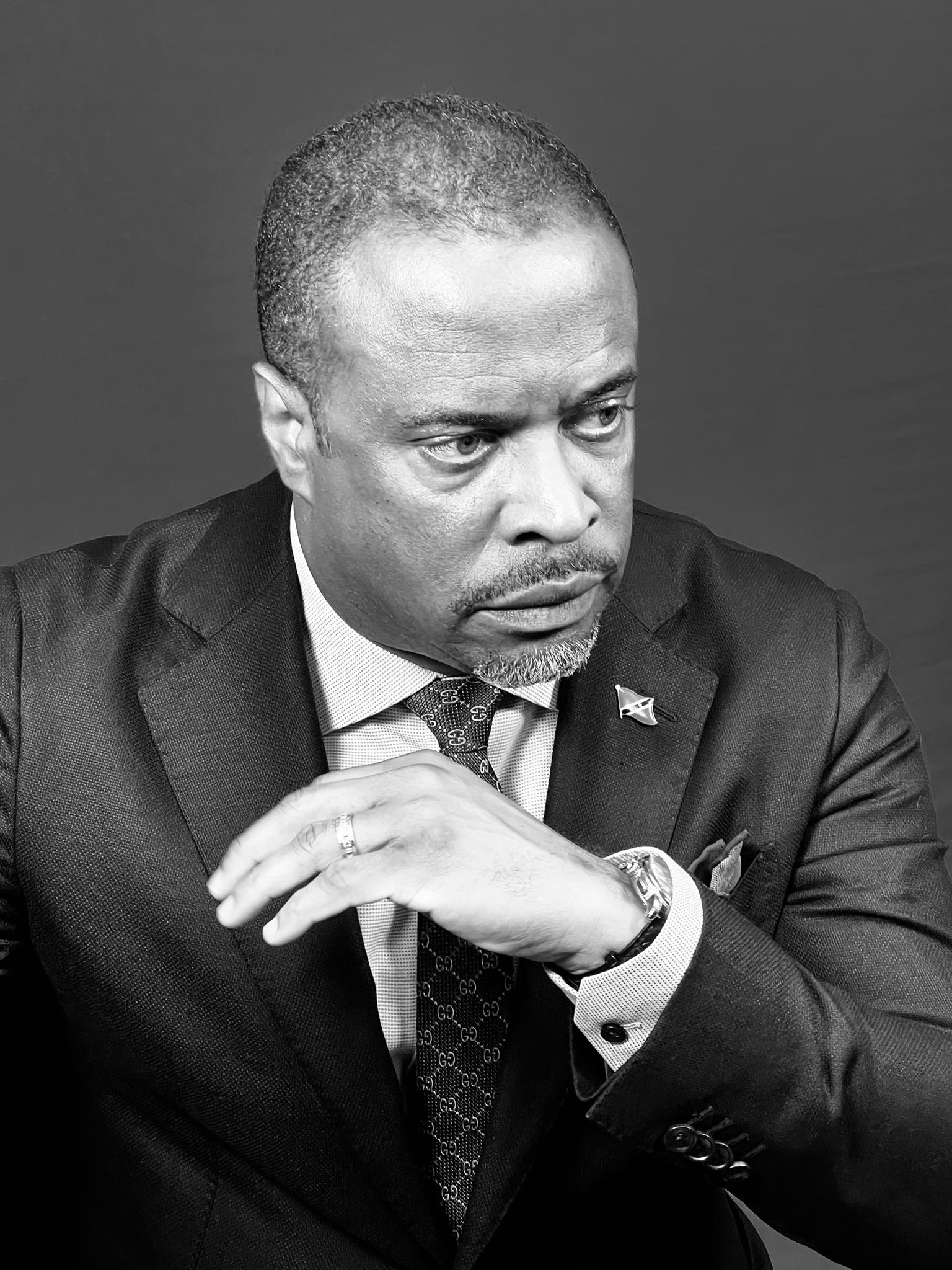
Does St. Kitts and Nevis hold the key to regional stability?
The Bible tells us at Isaiah 11:6 that “a little child shall lead them”. This simple yet profound statement inspires hope and suggests that a fresh perspective can lead to better outcomes. I use this passage of Holy Writ to underscore that St. Kitts and Nevis is the smallest Nation in the Caribbean. Despite its size however, it has by coincidence of rotation assumed the chair of the Council for Foreign and Community Relations (COFCOR) of the Caribbean Community (CARICOM) at its 28th meeting held in May 2025 and shall on January 1st, 2026 assume the Chair of the Caribbean Community (CARICOM). It means therefore that the smallest nation in the Caribbean will lead both COFCOR and CARICOM at the most tumultuous time that the region has seen in decades.
It is no secret that the Caribbean finds itself at an inflection point. Geographically, we are the third border to the great United States of America. Philosophically, we have long trumpeted our region as a Zone of Peace. Diplomatically, we have since the Cold War and beyond been forced to navigate an increasingly hostile global environment which gives no quarter to small island States.
Nature teaches us in many respects that the small and vulnerable increase their chances of survival by unifying and acting as one. This in my view was and continues to be the genius of CARICOM. Those founding fathers who set this region upon a path to greater unity of purpose recognized that we must as minnows navigate a global ocean of sharks. They recognized that to do so, we must act with unison of purpose and conviction. We must speak and act with one voice and resist the temptation to engage alone.
As I write, the United States has amassed an armada in the south Caribbean Sea. The stated reason is to fight drug trafficking emanating from Venezuela. Others see it as having the deeper purpose of regime change in Venezuela. Venezuela of course is of global significance because of the vast oil deposits on which it sits. The US has amassed this significant military force with the open assistance of our Caribbean sister Trinidad and Tobago, a founding member of CARICOM. Our other sister Grenada has been asked to have radar installations on its territory. It appears that these engagements have been entirely bilateral with little regard for CARICOM or a regional position. Claims of sovereignty and putting national interests first have resulted in regional leaders shouting at each other across the Caribbean Sea. CARICOM, we are now being told, is dysfunctional and an unreliable partner. Our much touted Zone of Peace is now at the brink of war.
It is at this inflection point for our Caribbean civilization that St. Kitts and Nevis assumes the mantle of regional leadership. What then must we do? We cannot merely sit on the sidelines and wring our hands in frustration. We must act and act together. We must hold dear the inalienable truth that the Caribbean civilization cannot afford the luxury of disunity.
Under the Revised Treaty of Chaguaramas, coordination of foreign policy is a key objective of CARICOM. Article 6 speaks to the “enhanced coordination of Member States’ foreign and foreign economic policies.” That coordination is left to COFCOR to navigate. I therefore posit the following points for consideration:
* Individual members of CARICOM should subordinate their national interests in engaging on the issue of Venezuela to the strategic regional interest of CARICOM as a whole. The Caribbean should engage with third party States en bloc through CARICOM consistent with Article 6 of the Revised Treaty of Chaguaramas.
* The region should hold fast to the position that we are a Zone of Peace and resist becoming another theatre for global conflict and its attendant human suffering
* Caribbean leaders must show restraint in publicly attacking each other. As one Caribbean family, let us resist the base temptation to air dirty laundry publicly. Our external posture must always be one of unity.
* We must deploy the elder statesmen of the Region (like former Prime Minister of Jamaica PJ Patterson, former Prime Minister of St Vincent and the Grenadines Dr. Ralph Gonsalves and former Prime Minister of St. Lucia Dr. Kenny Anthony) to act as CARICOM emissaries to Venezuela to negotiate a peaceful resolution to existing tensions within Venezuela
* CARICOM should leverage relationships with Latin America including those through the 35 member Organization of American States (OAS) currently led by a distinguished son of CARICOM and the 33 member Community of Latin American and Caribbean States (CELAC) to seek a wider regional consensus on Venezuela and our region as a Zone of Peace.
* CARICOM envoys to Venezuela should be guided by the Montevideo Mechanism. This framework was proposed in Montevideo, Uruguay on 6 February 2019 by the governments of Mexico, Uruguay and CARICOM and envisions a four‑phase process designed to help facilitate a peaceful, negotiated solution to Venezuela’s political crisis.
* CARICOM should engage simultaneously with the United States on de-escalating tensions in the region and should invite the United Nations, the European Union and Canada to assist in the de-escalation. The United States wishes assurances of its national security and what better way to secure the United States than to have reliable friends and a Zone of Peace as its 3rd border?
* The 50th Regular Meeting of CARICOM Heads of Government scheduled for 25-27th February, 2026 in Basseterre, St. Kitts should be convened earlier given the gravity and urgency of the situation in the south Caribbean Sea.
Given the current military build-up in the Caribbean, time is of the absolute essence. Our region is at the brink and peace demands committed and steadfast diplomacy. I wish the leadership of St. Kitts and Nevis every success at this most difficult time. This period in the history of our Caribbean civilization will define not only St. Kitts and Nevis’ capacity for leadership but will also define leadership in our wider Caribbean region.
Honourable Mark Brantley,
Premier of Nevis
Leader of the Opposition, St. Kitts and Nevis